
From source to image
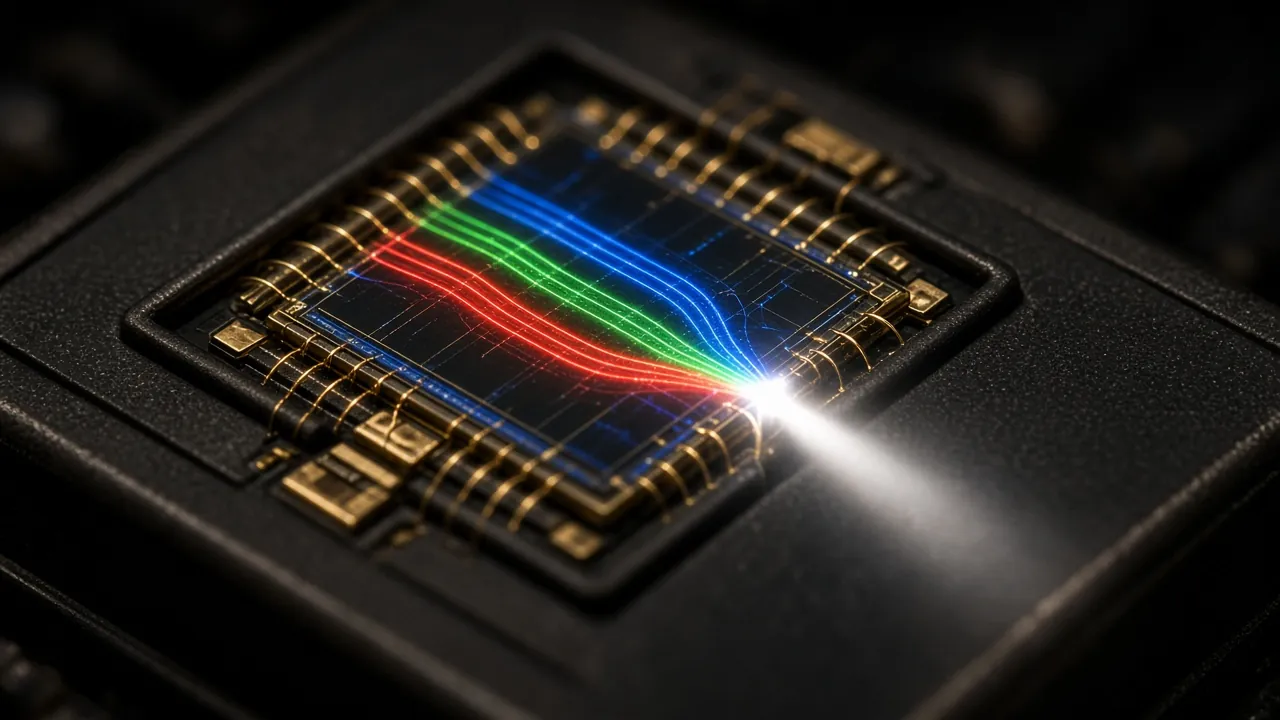
An optical engine supplies, conditions and modulates light before it reaches a display or near-eye combiner, using microdisplays, scanning systems or spatial light modulation to form images.
Integrated illumination
Photonic integrated circuits guide and distribute light within a compact assembly. A 2025 Nature paper demonstrates a 2 mm-thick flat-panel laser display in which a large-scale visible PIC replaces the free-space illumination module.1
Colour and optical quality
Red, green and blue channels are combined and shaped into a full-colour image, with uniformity, colour balance, contrast and coupling into downstream optics at the heart of display-engine engineering.
Holographic optical elements
Holographic optical elements recorded in photosensitive materials act as thin, transparent combiners, and full-colour HOEs have been developed specifically for AR displays.2
Commercial development
Vienna-based Vitrealab develops the Quantum Light Chip, a PIC for compact laser–LCoS light engines, and in November 2026 formed an industry advisory board to accelerate its commercialisation for AR glasses.3
Sources
- Flat-panel laser displays through large-scale photonic integrated circuitsNature · 20 August 2025
- Full-Color Holographic Optical Elements for Augmented Reality DisplayHolographic Materials and Applications (IntechOpen) · 2019
- Vitrealab Establishes Industry Advisory Board to Accelerate Commercialization of Quantum Light Chip for Next-Generation AR GlassesOptica · 13 November 2026